Introduction to the Sri Lanka vs Bangladesh Cricket Contest
The Sri Lanka national cricket team vs Bangladesh national cricket team match scorecard is more than a simple statistical record; it is a detailed reflection of how two Asian cricketing nations have evolved, competed, and challenged each other across formats. Over the years, this rivalry has transformed from predictable outcomes into intense contests that attract massive attention from cricket fans, analysts, and digital audiences searching for detailed scorecards and match explanations. Every scorecard captures the rhythm of the match, the pressure moments, the rise of individual brilliance, and the tactical battles that define modern international cricket.
Sri Lanka entered international cricket much earlier and established itself as a global powerhouse by winning the 1996 Cricket World Cup and producing legendary players across generations. Bangladesh, although initially struggling at the international level, has shown remarkable growth, especially since the 2010s, turning matches against Sri Lanka into competitive affairs. Today, whenever these teams meet, the match scorecard becomes a vital document that tells the complete story of the game from the first ball to the final wicket.
Table of Contents
Match Overview and Competitive Context
Format Diversity and Its Impact on the Scorecard
Matches between Sri Lanka and Bangladesh take place in Test cricket, One Day Internationals, and Twenty20 Internationals, and each format creates a distinctly different type of scorecard. Test match scorecards emphasize patience, defensive technique, long partnerships, and sustained bowling pressure, often stretching across five days. ODI scorecards balance consistency and aggression, showing run rates, partnerships, and bowling economy as crucial factors. T20I scorecards, meanwhile, focus on strike rates, power-hitting, dot-ball pressure, and death-over execution.
The diversity of formats means that a Sri Lanka national cricket team vs Bangladesh national cricket team match scorecard can range from a low-scoring spin-dominated battle to a high-scoring run-fest decided in the final over. Understanding the format is essential to interpreting the numbers within the scorecard correctly.
Venue Influence and Playing Conditions
Venues play a decisive role in shaping the scorecard. Sri Lankan grounds such as Galle, Colombo, and Kandy are known for assisting spin as matches progress, often leading to scorecards dominated by spinners in later innings. Bangladeshi venues like Mirpur and Chattogram offer slow pitches with low bounce, making run-scoring challenging and emphasizing strike rotation.
Weather conditions, pitch wear, and boundary size directly influence totals, strike rates, and bowling figures. A dry surface can lead to collapsing scorecards, while a flat pitch can produce centuries and high team totals. These elements must always be considered when analyzing any Sri Lanka vs Bangladesh match scorecard.
First Innings Match Scorecard Analysis
Batting Approach and Partnership Building
The first innings scorecard is critical because it establishes the tone of the match. When Sri Lanka bats first, their approach is usually methodical, with openers focusing on seeing off the new ball and building a platform. The scorecard often reflects disciplined shot selection, high leave percentages, and partnerships that gradually wear down the opposition bowling attack. Middle-order batters then capitalize, converting starts into substantial scores that push the team total into a commanding position.
When Bangladesh bats first, their scorecard highlights the importance of early momentum. Successful innings usually feature solid opening partnerships and calculated aggression against loose deliveries. However, early wickets often expose Bangladesh’s middle order to spin, leading to scorecards that show clusters of dismissals within short intervals.
Bowling Figures and Pressure Creation
Bowling figures in the first innings reveal how effectively teams execute their plans. Sri Lanka’s bowlers, particularly spinners, often dominate the wickets column while maintaining tight economy rates. Their ability to bowl consistent lines and lengths results in pressure that builds slowly but relentlessly, a pattern clearly visible in the scorecard.
Bangladesh’s bowling scorecards often show long spells from spinners designed to restrict scoring rather than aggressively hunt wickets. Fast bowlers play a supporting role, attempting to break partnerships with variations and cutters. The balance between control and aggression becomes evident through economy rates and wicket distribution.
Second Innings Scorecard and Match Development
Chasing Strategy and Mental Pressure
The second innings scorecard reveals how teams handle pressure situations. When Sri Lanka chases, their experience and batting depth often result in composed scorecards where the required run rate is managed carefully. Even after early setbacks, partnerships stabilize the innings, and the scorecard reflects calculated risk-taking rather than reckless aggression.
Bangladesh’s chasing scorecards frequently show contrasting phases. A strong start can create momentum, but the loss of key wickets often leads to a slowdown or collapse, especially against quality spin bowling. Successful chases usually depend on one or two standout performances supported by timely contributions from the lower order.
Defensive Bowling and Target Protection
When defending totals, Sri Lanka’s scorecard often highlights disciplined bowling spells and smart field placements. Spinners control the middle overs, while fast bowlers are used strategically to break partnerships. Bangladesh’s defensive efforts rely heavily on restricting boundaries and forcing mistakes, with the scorecard reflecting tight economy rates even if wickets are not frequent.
Detailed Batting Scorecard Evaluation
Top Order Responsibility and Technique
Top-order batters shape the narrative of the match scorecard. Sri Lanka’s top order is known for technical soundness and adaptability, resulting in consistent run accumulation across formats. Their ability to bat time in Tests and score efficiently in limited overs is clearly reflected in the scorecard through high averages and strike rates.
Bangladesh’s top order plays a crucial role in determining competitiveness. When they succeed, the scorecard shows fluent stroke play and strong partnerships. When they fail, the middle order faces increased pressure, often leading to uneven scorecards.
Middle Order Influence and Match Control
Middle-order performances often decide the outcome of Sri Lanka vs Bangladesh matches. Sri Lanka’s middle order typically focuses on stabilizing the innings and accelerating at the right moments, creating balanced scorecards. Bangladesh’s middle order, while capable of match-winning performances, sometimes struggles with consistency, a pattern visible through fluctuating scores.
Lower-order contributions can add significant value, especially in tight matches. Sri Lanka’s tail often adds crucial runs, while Bangladesh has shown gradual improvement in this area over recent years.
Bowling Scorecard Breakdown
Spin Bowling Dominance Across Formats
Spin bowling remains the defining feature of Sri Lanka vs Bangladesh encounters. The scorecard frequently shows spinners with high wicket tallies and low economy rates, particularly on turning tracks. Their success stems from variations in flight, pace, and angles, which exploit batter weaknesses and pitch conditions.
Fast Bowling as a Tactical Tool
Fast bowlers contribute through early breakthroughs and late-innings pressure. Their impact is reflected in the scorecard through key wickets rather than sheer volume. In limited-overs cricket, death-over bowling figures often determine the final outcome.
Head-to-Head Record and Statistical Trends
Overall Match History
Historically, Sri Lanka has dominated the head-to-head record against Bangladesh, particularly in Test cricket. Scorecards from earlier decades often show one-sided results. However, recent years have produced more competitive scorecards, especially in ODIs and T20Is, reflecting Bangladesh’s progress as a cricketing nation.
Format-Wise Performance Patterns
Test match scorecards highlight Sri Lanka’s experience and technical advantage, while ODI scorecards show narrowing margins and occasional Bangladeshi victories. T20I scorecards are the most unpredictable, often decided by small moments and individual brilliance.
Iconic Matches and Memorable Scorecards
Historic Test Encounters
Several Test matches between Sri Lanka and Bangladesh are remembered for marathon innings, dramatic collapses, and decisive final sessions. These scorecards showcase endurance, patience, and strategic depth, making them valuable case studies for cricket enthusiasts.
Unforgettable ODI and T20I Matches
Limited-overs scorecards between these teams often feature thrilling chases, high-pressure bowling spells, and standout individual performances. These matches highlight the entertainment value and growing intensity of the rivalry.
Tactical Insights Derived from Match Scorecards
Match scorecards reveal tactical philosophies adopted by both teams. Sri Lanka’s emphasis on control, spin dominance, and partnerships contrasts with Bangladesh’s momentum-based approach and aggressive phases. These strategies are visible through scoring patterns, dismissal types, and bowling changes recorded in the scorecard.
Impact of Pitch, Weather, and Conditions on Scorecards
Environmental factors heavily influence the Sri Lanka national cricket team vs Bangladesh national cricket team match scorecard. Dry pitches enhance spin effectiveness, while flat surfaces produce high totals. Weather interruptions can alter momentum, affecting run rates and batting strategies reflected in the final numbers.
Fan Engagement and Analytical Importance of Scorecards
Cricket fans, analysts, and selectors rely heavily on match scorecards to evaluate performances and trends. These scorecards provide insights into player form, team balance, and future potential, making them essential tools for understanding the game beyond the scoreboard.
Future Outlook of the Sri Lanka vs Bangladesh Rivalry
As both teams continue to evolve, future match scorecards are expected to become even more competitive. Bangladesh’s growing confidence and Sri Lanka’s blend of youth and experience promise closely contested matches that will produce fascinating statistical records.
Conclusion
The Sri Lanka national cricket team vs Bangladesh national cricket team match scorecard stands as a complete narrative of modern Asian cricket, capturing skill, strategy, pressure, and performance in numerical form. Each scorecard tells a story of how the match unfolded, highlighting key moments, individual brilliance, and tactical decisions. As this rivalry continues to grow, future encounters will add new chapters to an already compelling cricketing story, giving fans endless moments to analyze, discuss, and celebrate.
Related Posts
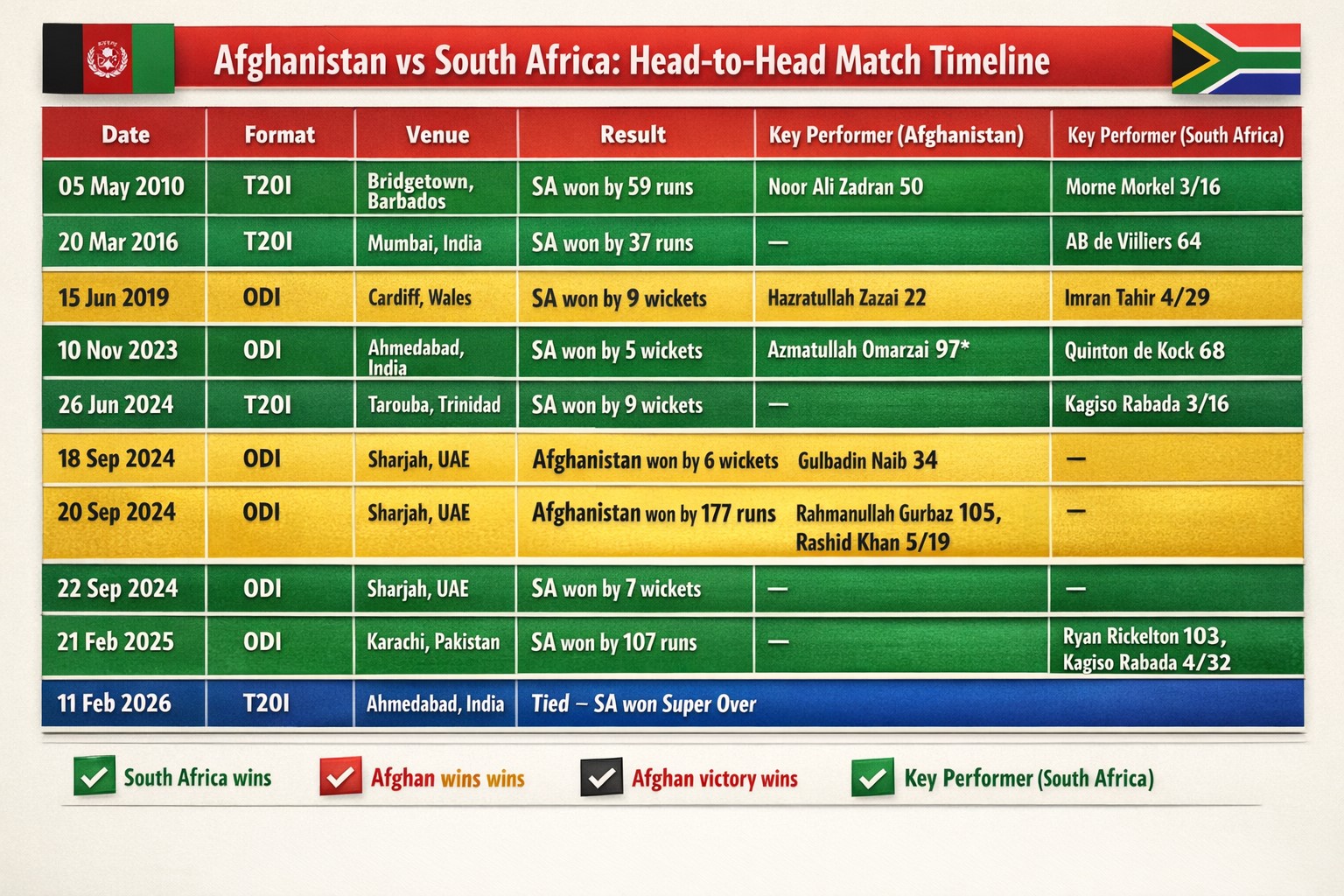
Thrilling Afghanistan National Cricket Team vs South Africa National Cricket Team Timeline
Introduction: afghanistan national cricket team vs south africa national cricket team timeline Cricket is a game of passion, strategy, drama, and history. When teams from different cricketing cultures meet on the international…
Thrilling Pakistan National Cricket Team vs India National Cricket Team Timeline – Legendary and Iconic Matches
Introduction: Pakistan National Cricket Team vs India National Cricket Team Timeline The cricket rivalry between the Pakistan National Cricket Team and the India National Cricket Team stands as one of the most…

United States National Cricket Team: Inspiring Rise, Full History, Timeline, and Star Players
The United States national cricket team represents the United States in international cricket and is governed by USA Cricket. Although cricket is not traditionally considered a mainstream sport in America like baseball,…