Introduction: Why Cricket Overs Changed from 4 to 6 Balls
Cricket, often referred to as a gentleman’s game, has evolved tremendously since its inception in the 16th century. One of the most intriguing aspects of cricket’s evolution is the number of balls per over. In the earliest days of the game, overs consisted of four deliveries. Over time, this changed to five, then six, and even eight in certain countries, before six-ball overs became the global standard. Understanding why cricket overs changed from 4 to 6 balls requires a deep dive into the history, rules, and practical considerations that shaped the sport as we know it today.
Table of Contents
Early History of Cricket and the 4-Ball Over
Cricket originated in England, and by the 18th century, it had begun to formalize into a competitive sport with codified rules. In the earliest recorded matches, the game was slow-paced and heavily influenced by pitch conditions and rudimentary equipment. Overs, which represent a set of consecutive deliveries bowled by a single bowler, were initially four balls long.
The choice of four balls per over was practical for several reasons. First, the pitches in the 18th and early 19th centuries were uneven and unpredictable, meaning that bowlers required time to adjust their line and length. Second, bowling techniques were still developing. Underarm and later roundarm bowling were common, which did not allow for the sustained pace or stamina needed for longer overs. Third, umpires had limited resources to track deliveries accurately, so shorter overs were easier to monitor. Four-ball overs provided a manageable structure while maintaining fairness and pace in the game.
This system continued for many decades, particularly in England, where first-class cricket matches adhered strictly to four-ball overs. However, as cricket expanded internationally and different countries began to develop their own styles, questions arose about efficiency, stamina, and match duration.
Transition to 5-Ball Overs
By the late 19th century, some cricket-playing nations began experimenting with five-ball overs. The main motivation behind this change was to reduce the frequency of changing ends during the match. Each change of ends required time, coordination, and could disrupt the flow of the game. By increasing the number of balls per over, matches became slightly more efficient without dramatically altering the bowler’s workload.
Australia, in particular, was among the countries that experimented with five-ball overs during domestic cricket matches. The aim was to create a balance between bowler endurance and game management. While this was a step forward, it did not fully standardize international cricket. Different countries adopted different over lengths, which sometimes caused confusion during tours and Test series.
The Emergence of the 6-Ball Over
The modern six-ball over emerged primarily for reasons of efficiency, consistency, and international standardization. By the early 20th century, the Marylebone Cricket Club (MCC), which was the governing body of cricket laws, began recommending six-ball overs as the preferred standard.
There were several practical reasons for this change. A six-ball over allowed bowlers to settle into a rhythm while reducing the number of end changes in a match. This helped maintain the flow of play, which was becoming increasingly important as cricket matches lengthened to three, four, or five days. For spectators, longer overs meant fewer interruptions, making the game more engaging. Additionally, international tours were becoming more common, and having a standardized over length simplified rules and planning across countries.
While six-ball overs became common in England and India, some countries, like Australia and South Africa, continued experimenting with eight-ball overs for certain periods. Australia, for example, used eight-ball overs in domestic cricket and some international matches until the 1970s. The decision to eventually adopt six-ball overs universally was influenced by the desire for uniformity and ease of scheduling.
Why Different Countries Had Different Over Lengths
The variations in over lengths across countries highlight the practical considerations each cricketing nation faced. For example:
- England: Primarily used four-ball and later six-ball overs. Consistency with MCC regulations guided this approach.
- Australia: Favored longer overs of six or eight balls to reduce interruptions in longer domestic matches, particularly Sheffield Shield games.
- South Africa: At times used eight-ball overs to accelerate play and manage bowler stamina on hot pitches.
- India and New Zealand: Adopted six-ball overs earlier due to the influence of English cricket.
These variations sometimes caused confusion in international matches, especially Test series, because teams had to adjust their strategies and bowler rotations based on the number of balls per over.
Impact of Changing Over Length on Cricket
The evolution from four-ball to six-ball overs significantly influenced the game of cricket. For bowlers, six-ball overs allowed more extended spells without excessive fatigue. They could develop strategies over a longer sequence of deliveries, which made matches more competitive and nuanced. For batsmen, longer overs provided opportunities to settle into an innings and plan scoring patterns against bowlers.
From an administrative perspective, longer overs simplified scheduling and reduced the number of end changes per day. This became especially important with the rise of multi-day Test matches, where time management was critical to ensure completion. For spectators, longer overs enhanced the entertainment factor by reducing stoppages and providing continuous action.
Timeline of Changes in Over Length
Here is a detailed timeline showing how cricket overs evolved from 4 balls to the universally adopted 6-ball standard:
| Year / Period | Country / Context | Number of Balls per Over | Notes |
|---|---|---|---|
| 1780s–1800s | England | 4 | Standard early overs in first-class cricket. |
| 1880s | Australia | 4–5 | Experimentation with 5-ball overs for efficiency. |
| 1900–1902 | England / MCC | 5–6 | Transition phase toward six-ball overs. |
| 1900s–1930s | England / India | 6 | Six-ball overs recommended by MCC, gradually adopted. |
| 1920s–1970s | Australia | 8 | Longer overs used in domestic and some Test matches. |
| 1930s–1970s | South Africa | 8 | Eight-ball overs in domestic cricket. |
| 1979 onwards | International | 6 | Universal adoption of six-ball overs for standardization. |
This timeline illustrates that the evolution was gradual and influenced by practical considerations such as match duration, bowler workload, and international standardization.
Advantages of Six-Ball Overs
Six-ball overs offered multiple advantages that contributed to their universal adoption:
- Efficiency in Play: Fewer end changes meant less wasted time and a smoother flow.
- Consistency Across Nations: Standardization made international tours easier and reduced confusion.
- Better Bowler Management: Bowlers could develop strategies over a more extended series of deliveries.
- Enhanced Spectator Experience: Continuous play with fewer interruptions made matches more enjoyable to watch.
- Simplified Administration: Scheduling and scoring became easier to manage with a uniform over length.
Challenges During Transition
The transition from four-ball to six-ball overs was not without challenges. Teams that were accustomed to shorter overs had to adjust their strategies, particularly for bowler rotations and stamina management. Some bowlers initially struggled to maintain their pace over longer overs, while batsmen had to adapt to facing more consecutive deliveries from the same bowler. Additionally, countries that used eight-ball overs had to gradually conform to the six-ball standard, which required adjustments in domestic scheduling and player preparation.
Modern Cricket and the Six-Ball Over
Today, six-ball overs are universally used in Test matches, One-Day Internationals (ODIs), and Twenty20 cricket. This consistency allows players to focus on skill development and strategy without worrying about variations in over length. The decision to adopt six-ball overs globally demonstrates how a seemingly small rule change can profoundly impact the game’s structure, strategy, and appeal.
The six-ball over also forms the basis for statistical comparisons across eras, helping historians and analysts evaluate performances consistently. Without a standardized over length, comparing bowlers and batsmen from different countries and eras would be far more complicated.
Frequently Asked Questions (FAQs)
Q1: Why were overs originally 4 balls?
Overs were originally 4 balls because early cricket had slower bowling styles, rough pitches, and limited umpiring resources, making shorter overs practical and manageable.
Q2: When did six-ball overs become standard?
Six-ball overs gradually became standard in the early 20th century, with the MCC recommending them, and they were universally adopted by the late 1970s.
Q3: Did any country use more than six balls per over?
Yes, Australia and South Africa at times used eight-ball overs in domestic and international matches before adopting the six-ball standard.
Q4: How did changing over lengths affect players?
Longer overs allowed bowlers to develop strategies and settle into a rhythm while giving batsmen a more continuous sequence of deliveries to plan their innings.
Q5: Why is six balls considered ideal for an over?
Six balls balance bowler workload, game efficiency, and spectator experience. It also simplifies international standardization and statistical comparisons.
Q6: Are six-ball overs used in all formats of cricket today?
Yes, six-ball overs are universally used in Test cricket, One-Day Internationals, and Twenty20 formats worldwide.
Cricket overs have come a long way from the early four-ball overs of the 18th century to the modern six-ball standard used globally today. This evolution reflects not only changes in the rules but also the development of bowling techniques, match management strategies, and international standardization efforts. Understanding why cricket overs changed from 4 to 6 balls provides insight into the strategic, practical, and administrative aspects that have shaped cricket into the dynamic, widely loved sport it is today.
Related Posts

Indian Women Cricket Team: Complete History, Growth, Achievements, Legendary Players, and Future Vision
Introduction to the Indian Women Cricket Team The Indian Women Cricket Team is one of the most inspiring success stories in the history of Indian sports. What started as a little-known and…
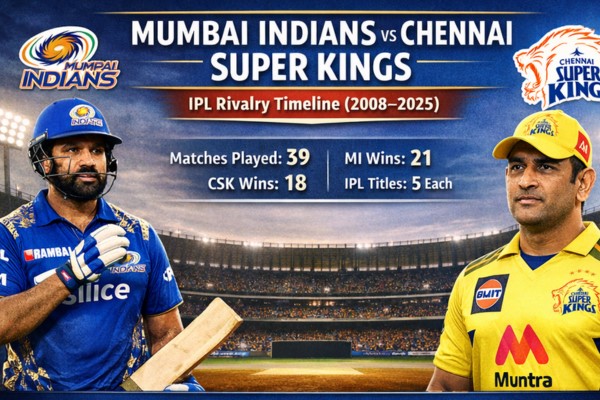
Mumbai Indians vs Chennai Super Kings Timeline: Legendary Battles and Thrilling Moments in IPL History
Introduction: Mumbai Indians vs Chennai Super Kings Timeline The rivalry between the Mumbai Indians (MI) and the Chennai Super Kings (CSK) is the most celebrated and compelling narrative in the history of…

In Which Country Was the Googly Invented? Complete History, Origin, and Evolution of Cricket’s Most Deceptive Delivery
Introduction: In Which Country Was the Googly Invented Cricket is a sport rich with innovation, strategy, and fascinating stories. Over the centuries, players have developed new techniques to outsmart their opponents. One…