Introduction to Australia Cricket Team
The Australia cricket team is one of the most iconic and successful teams in the history of international cricket, representing Australia at the global stage and consistently delivering outstanding performances across all formats including Test matches, One Day Internationals (ODIs), and Twenty20 Internationals (T20Is). Governed by Cricket Australia, the team has been a benchmark for excellence, producing legendary cricketers and memorable cricketing moments that have shaped the sport worldwide. Known for their competitive spirit, aggressive style, and strategic gameplay, the Australia cricket team has established itself as a powerhouse in cricketing history. Australia’s cricket journey dates back to the 19th century with the first official Test match played against England in 1877 at the Melbourne Cricket Ground, a match that also marked the beginning of the famed Ashes series which remains one of the most celebrated rivalries in cricket. Over the decades, Australia has not only dominated Test cricket but also achieved unparalleled success in limited-overs cricket, cementing its place as a cricketing giant admired across the globe for skill, consistency, and adaptability.
Table of Contents
History of Australia Cricket Team
Early Years (1877–1945)
The Australia cricket team played its first Test match on March 15–19, 1877, against England at the MCG, winning the match by 45 runs and laying the foundation for international cricket in Australia. During these early years, Australian cricket saw legends like Charles Bannerman, who scored the first-ever Test century, and Victor Trumper, a batsman admired for his elegant stroke play and innovative style. Australia also began touring England regularly, establishing a strong cricketing presence abroad, and the Ashes rivalry with England started in 1882 after a humorous mock obituary in The Sporting Times claimed that English cricket had died following a defeat to Australia, igniting a century-long rivalry that continues to enthrall cricket fans worldwide. During this period, Australia developed a reputation for producing aggressive batsmen and resilient fast bowlers, laying the groundwork for future generations with an emphasis on skill, endurance, and tactical intelligence that became a hallmark of Australian cricket.
Post-War Era (1945–1970)
After World War II, Australian cricket experienced a golden era led by players like Don Bradman, widely regarded as the greatest cricketer of all time. Bradman’s batting prowess, with a phenomenal Test average of 99.94, became legendary, inspiring countless cricketers worldwide and giving Australia an unshakable dominance in international cricket. His contributions, combined with players like Keith Miller and Ray Lindwall, helped Australia maintain its stronghold in both home and away matches. This era also emphasized fitness, professionalism, and strategic planning, making Australian cricket a model for the rest of the world. The team’s successes in this period were defined by resilience, consistency, and the emergence of a winning culture that became the backbone of future achievements.
Modern Era (1970–2000)
The introduction of One Day Internationals in the 1970s transformed the cricketing landscape, and Australia adapted swiftly with a combination of aggressive batting, disciplined bowling, and innovative strategies. Captains like Greg Chappell and Allan Border led the team through a period of rebuilding and dominance, achieving remarkable success in limited-overs cricket while maintaining excellence in Tests. Australia won its first ICC Cricket World Cup in 1987, defeating England, and later triumphed in 1999, 2003, and 2007 under leaders like Steve Waugh and Ricky Ponting, marking an era of unmatched dominance. During this period, Australia’s approach to cricket became more professional, combining advanced coaching, player development, and tactical planning, which allowed them to adapt to changing formats and maintain supremacy over rivals.
Australia Cricket Team in ICC Tournaments
ICC Cricket World Cup
Australia holds the record for the most World Cup victories in cricket history, winning five titles. Their first victory came in 1987 under Allan Border, followed by a dominant performance in 1999 under Steve Waugh, another commanding win in 2003 with Ricky Ponting at the helm, a continued streak in 2007 with a comprehensive campaign against Sri Lanka, and finally in 2015, co-hosted with New Zealand, defeating the host nation in a thrilling final. These victories reflect Australia’s adaptability, meticulous preparation, team cohesion, and ability to perform under high-pressure situations, consistently demonstrating superior batting, bowling, and fielding skills that set the benchmark for world cricket.
ICC T20 World Cup
Initially, Australia faced challenges in T20 cricket, often struggling against more explosive opponents. However, with the rise of young, versatile players and strategic planning, Australia won its first ICC T20 World Cup in 2021, defeating New Zealand in a high-intensity final. This victory highlighted Australia’s versatility and their ability to adjust to fast-paced, shorter formats, showcasing a blend of experience, tactical innovation, and fearless batting and bowling that allowed them to compete and dominate even in modern cricket’s dynamic landscape.
ICC Champions Trophy
While Australia has participated in the ICC Champions Trophy multiple times, the team has yet to secure a title in this tournament despite several strong performances and consistent appearances in semifinals and finals. Their presence in the competition, however, demonstrates their depth, resilience, and ability to challenge top cricketing nations across formats, reflecting a commitment to excellence and adaptability regardless of conditions, opponents, or match pressure.
Legendary Australian Cricketers
Sir Donald Bradman
Don Bradman is universally regarded as the symbol of Australian cricket and the greatest batsman in cricket history. Playing between 1928 and 1948, Bradman redefined batting standards, achieving 6,996 runs in Test cricket at an astonishing average of 99.94, a feat unmatched by any cricketer before or since. Beyond numbers, Bradman’s influence on Australian cricket was immense, inspiring generations, elevating the sport’s popularity, and instilling a culture of excellence, discipline, and determination that remains a cornerstone of Australia’s cricketing legacy.
Shane Warne
Shane Warne, the legendary leg-spinner, transformed spin bowling in modern cricket with his extraordinary skill, sharp turn, and tactical intelligence. With over 700 Test wickets, Warne’s ability to outthink batsmen, generate pace and spin variations, and dominate matches made him an iconic figure in world cricket. His contributions extended beyond statistics, influencing spin bowling techniques and inspiring aspiring bowlers globally to adopt a more strategic and aggressive approach to the art of spin.
Ricky Ponting
Ricky Ponting, a former captain and prolific batsman, led Australia to two World Cup titles and numerous Test series victories. Known for his aggressive batting, sharp fielding, and strategic leadership, Ponting became one of the most successful captains in cricket history. Under his guidance, Australia enjoyed an era of dominance marked by unbeaten streaks, disciplined performances, and the development of young talent into world-class players, solidifying his legacy as both a player and a leader.
Glenn McGrath
Glenn McGrath was a fearsome fast bowler celebrated for his accuracy, consistency, and ability to dominate opposition batting lineups. With over 500 Test wickets and a remarkable ODI career, McGrath’s contributions were pivotal in Australia’s success during the 1990s and early 2000s. His focus on line and length, combined with mental resilience, exemplified the precision and professionalism that became synonymous with Australian bowling during this era.
Adam Gilchrist
Adam Gilchrist revolutionized the role of wicketkeeper-batsman with explosive batting, exceptional wicketkeeping, and the ability to change matches single-handedly. His aggressive style, quick scoring, and fearless approach added a new dimension to Australian cricket, often turning matches decisively and giving Australia a strategic advantage in both Tests and limited-overs formats.
Current Australian Cricket Team (2026)
Test Team
The current Australian Test team is led by Pat Cummins, one of the best fast bowlers in the world, with Steve Smith serving as vice-captain. Key players include Marnus Labuschagne, David Warner, Mitchell Starc, and Nathan Lyon, forming a balanced lineup of experienced batsmen and lethal bowlers. This combination ensures Australia remains highly competitive in both home and overseas conditions, maintaining its historical strength in Test cricket while adapting to modern challenges with strategic flexibility, disciplined execution, and consistent performance.
ODI Team
In ODIs, Pat Cummins leads the side, supported by vice-captain Aaron Finch, with influential players like Glenn Maxwell, Mitchell Marsh, and Josh Hazlewood contributing to the team’s success. Australia’s ODI approach blends explosive batting, disciplined bowling, and agile fielding, enabling them to dominate opposition teams in both high-pressure tournaments and bilateral series, reflecting their adaptability and tactical depth across formats.
T20I Team
The T20I team is captained by Mitchell Marsh, with stars like David Warner, Josh Inglis, and Adam Zampa forming the backbone of the squad. Australia’s T20I strategy emphasizes aggressive batting at the top order, versatile bowling options, and dynamic fielding, allowing them to compete effectively in fast-paced, short-format games while nurturing young talent and maintaining a competitive edge in international tournaments.
Playing Style and Strengths
Batting Strengths
Australia is renowned for its aggressive and technically sound batting. Players like David Warner, Steve Smith, and Marnus Labuschagne combine resilience, adaptability, and innovation, making it difficult for opponents to dominate them in any condition. Their approach balances calculated risk-taking with consistent run-scoring, emphasizing partnerships, strategic shot selection, and the ability to accelerate or stabilize innings as required, which has been a hallmark of Australian cricket across generations.
Bowling Strengths
Australia has consistently produced world-class fast bowlers such as Mitchell Starc, Pat Cummins, and Josh Hazlewood, whose pace, accuracy, and tactical intelligence make them formidable opponents in all conditions. Coupled with spin options like Nathan Lyon, Australia maintains a balanced attack capable of exploiting any pitch or situation. The team’s emphasis on disciplined bowling, strategic variations, and pressure-building consistently creates match-winning opportunities, reflecting their strength and adaptability as a bowling unit.
Fielding Excellence
Australian cricket teams are known for exceptional fielding standards, with agile fielders, accurate throws, and quick reflexes turning matches in their favor. Their athleticism and commitment to fielding excellence often disrupt opposition plans, enhance bowling effectiveness, and create crucial breakthroughs, contributing significantly to Australia’s sustained dominance in all formats of the game.
Major Rivalries
Australia vs England
The Ashes series represents one of cricket’s fiercest rivalries, contested since 1882. Alternating every two years between the two nations, these matches showcase intense competition, historic traditions, and unmatched fan engagement. The Ashes symbolize not only national pride but also Australia’s enduring cricketing excellence and ability to perform under high-pressure situations against their oldest adversaries.
Australia vs India
Matches between Australia and India have grown in intensity in recent decades, particularly in ICC tournaments and bilateral series. With strong batting lineups, aggressive bowling attacks, and highly competitive contests, these encounters are often thrilling, requiring strategic planning, adaptability, and mental toughness, reflecting the high standards and quality of modern cricket.
Australia vs South Africa
Australia’s rivalry with South Africa is built on competitive cricket, with fast bowlers and top-order batsmen from both teams producing memorable matches. This rivalry emphasizes physical endurance, mental resilience, and skill execution in challenging conditions, contributing to some of the most memorable moments in international cricket history and showcasing Australia’s ability to adapt and excel in diverse environments.
Records and Achievements
Australia has achieved remarkable feats in cricket, including over 400 Test wins, the most World Cup titles at five, highest individual Test scores like Mark Taylor’s 334, and bowling records held by Shane Warne with 708 wickets. Their fast bowlers and batsmen have set benchmarks for consistency, adaptability, and strategic performance. Australia’s dominance across formats reflects a legacy of preparation, professionalism, and excellence, making them one of the most formidable cricket teams in history.
Contribution to World Cricket
Australia has greatly influenced global cricket through innovation, competitive spirit, and the development of world-class talent. Their professionalism, coaching structures, and grassroots programs serve as models for other nations. Australia’s approach to cricket emphasizes preparation, adaptability, fitness, and mental resilience, inspiring players and teams worldwide. Their consistent success, legendary players, and memorable matches continue to shape cricket culture and set global standards for excellence, sportsmanship, and performance.
Conclusion
The Australia cricket team is more than a national team; it symbolizes resilience, excellence, and cricketing brilliance. From Don Bradman to modern stars like Pat Cummins and Steve Smith, Australia has consistently shaped cricket history, dominating ICC tournaments, building fierce rivalries, and producing world-class talent. Their blend of experience, skill, and strategic gameplay ensures they remain a dominant force in international cricket, inspiring fans and players globally while leaving an indelible mark on the history of the sport. Australia’s cricket legacy continues to grow, combining tradition, innovation, and an unwavering commitment to excellence that defines them as one of the greatest cricketing nations of all time.
Related Posts
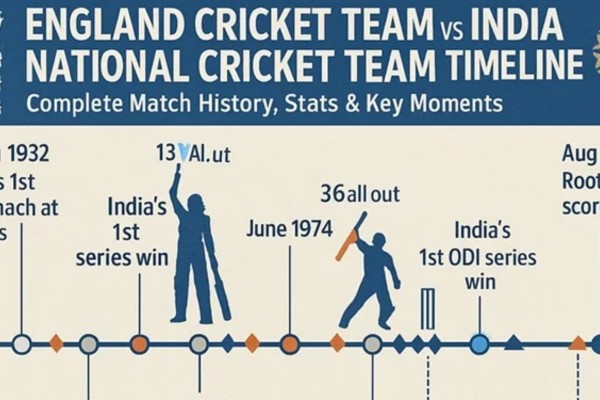
England Cricket Team vs India National Cricket Team Timeline: Unforgettable Matches, Records & Legendary Rivalry (1932–2025)
Introduction – England Cricket Team vs India National Cricket Team Timeline The rivalry between the England Cricket Team and the India National Cricket Team stands as one of the most enduring, meaningful,…

Epic South Africa National Cricket Team vs New Zealand National Cricket Team Timeline: Complete 30+ Years History, Legendary Matches, Iconic Players & Defining Moments
Introduction: Epic South Africa National Cricket Team vs New Zealand National Cricket Team Timeline The South Africa National Cricket Team vs New Zealand National Cricket Team timeline is one of the most…

Thrilling Pakistan National Cricket Team vs South Africa National Cricket Team Timeline – Complete Match History and Key Highlights
Introduction: Pakistan National Cricket Team vs South Africa National Cricket Team Timeline The rivalry between the Pakistan National Cricket Team and the South Africa National Cricket Team stands as one of the…