Cricket, a sport that has captured the hearts of millions worldwide, has evolved through numerous phases of development. Each phase brought with it legendary players, unforgettable matches, and transformative innovations, leaving a permanent mark on the history of the game. Historians and cricket enthusiasts often refer to these exceptional periods as the Golden Era of Cricket Eras. Understanding these eras is not just about numbers and records—it’s about the evolution of technique, strategy, spirit, and global popularity.
In this comprehensive article, we will journey through the multiple golden eras of cricket, examining the players, milestones, innovations, and key matches that made each period remarkable. From the dominance of Don Bradman to the spectacle of modern T20 cricket, we will explore how cricket has transformed over nearly a century.
Table of Contents
Understanding the Concept of a Golden Era in Cricket
A golden era is often characterized by peak performance levels, groundbreaking achievements, and players whose influence lasts long after their careers end. In cricket, these periods are marked by:
- Legendary players: Individuals whose records and skills define generations.
- Memorable matches: Games that are remembered for dramatic moments, rivalries, or innovations.
- Tactical and technical evolution: Changes in how the game is played, including strategies, rules, and formats.
- Global expansion and popularity: Growth of cricket beyond traditional strongholds to new regions.
Each era of cricket has contributed something unique to the sport, whether it is the dominance of a single player, the rise of a new cricketing nation, or the introduction of a revolutionary format.
The Early Golden Era (1930s–1950s)
Rise of Legendary Batsmen
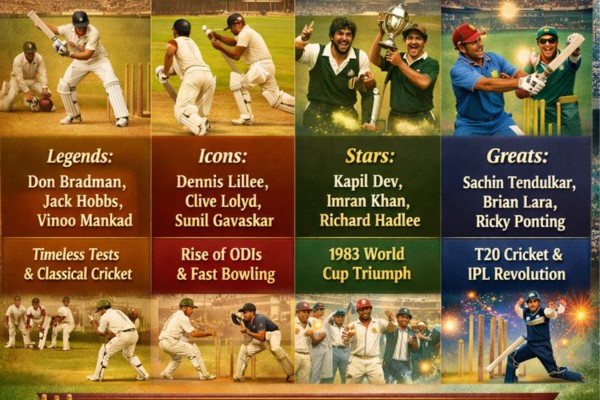
The 1930s to 1950s is widely regarded as the first golden era of cricket. This era produced some of the most iconic batsmen in cricket history, including:
- Sir Donald Bradman (Australia): Known as “The Don,” Bradman dominated international cricket with an almost mythical batting average of 99.94. His unmatched consistency and technique made him a symbol of cricketing excellence.
- Jack Hobbs (England): Often called the “Master,” Hobbs was renowned for his elegant stroke play and long career.
- Vinoo Mankad (India): An exceptional all-rounder, Mankad made significant contributions both with the bat and ball, including inventing the famous “Mankading” dismissal.
These players set new standards for batting technique, mental resilience, and sportsmanship.
Key Innovations and Match Styles
During this era, cricket was evolving in both style and strategy:
- Timeless Tests: Matches were played until a result was achieved, allowing for extended tactical battles.
- Bodyline Bowling: Introduced by England during the 1932–33 Ashes series, this tactic of fast, short-pitched bowling aimed at the body sparked controversy but influenced bowling strategies for decades.
- Spin Bowling: Spinners like Lala Amarnath and Hedley Verity refined techniques that are still studied today.
Iconic Matches and Series
- Bodyline Series (1932–33): England vs Australia, remembered for both controversy and tactical brilliance.
- India’s early Test victories: Vinoo Mankad and Lala Amarnath helped establish India as a competitive Test nation.
- Bradman’s 334 vs England (1930): A historic innings that remains legendary in cricket history.
The Post-War Golden Era (1960s–1970s)
The Emergence of Fast Bowling
After World War II, cricket experienced a surge in pace and aggression:
- Dennis Lillee and Jeff Thomson (Australia): Introduced fearsome fast bowling, combining speed and bounce.
- Charlie Griffith and Wes Hall (West Indies): Their lethal pace attack helped establish the Caribbean as a cricketing powerhouse.
Global Expansion and New Nations
The 1960s and 1970s saw the expansion of cricketing power:
- West Indies’ dominance: A new era of Caribbean cricket began under leaders like Clive Lloyd, showcasing athleticism and dominance.
- India and Pakistan rise: India’s solid batting and Pakistan’s emerging fast bowlers made international contests highly competitive.
- ODI Cricket: Introduced in 1971, the limited-overs format revolutionized the sport, demanding quicker scoring and innovative strategies.
Legendary Players of the Era
- Sunil Gavaskar (India): Known for his impeccable technique and ability to dominate fast bowlers.
- Clive Lloyd (West Indies): A powerful batsman and inspirational leader.
- Dennis Lillee (Australia): Redefined pace bowling with unmatched aggression.
Key Matches and Highlights
- 1975 World Cup Final: West Indies vs Australia, marking the beginning of one-day cricket prominence.
- India vs West Indies series victories: Emerging stars showcased the tactical growth of cricket in Asia.
The Modern Golden Era (1980s–1990s)
India’s Rise on the World Stage
The 1980s was a transformative period for Indian cricket:
- 1983 World Cup Victory: Kapil Dev led India to a historic win, defeating the mighty West Indies.
- Legendary Indian Players: Kapil Dev, Ravi Shastri, Sunil Gavaskar, and Mohinder Amarnath became national icons.
Dominant Teams and International Stars
- Imran Khan (Pakistan): Led Pakistan with charisma and skill, combining fast bowling and batting prowess.
- Richard Hadlee (New Zealand): One of cricket’s greatest all-rounders, revolutionizing swing bowling.
- Allan Border (Australia): Stabilized Australian cricket and laid the foundation for future dominance.
Tactical and Technical Evolution
This era introduced modern tactics:
- Advanced field placements: Teams used aggressive fielding positions to dominate matches.
- Fitness and professionalism: Players began structured training, focusing on endurance and skill.
- Reverse swing and spin innovations: Bowlers developed new techniques to outwit batsmen.
Iconic Records and Matches
- Viv Richards’ ODI dominance: Redefined the art of aggressive batting.
- Pakistan 1992 World Cup Win: Innovative captaincy and cohesive team strategy highlighted cricket’s evolution.
- Gavaskar’s 10,000 Test runs: Demonstrated India’s emergence as a cricketing powerhouse.
The Contemporary Golden Era (2000s–2010s)
Legends of Modern Cricket
The turn of the century brought cricket into a professional, highly competitive era:
- Sachin Tendulkar (India): The “God of Cricket,” with 100 international centuries and numerous records.
- Brian Lara (West Indies): Known for his elegant stroke play and monumental innings, including a 400-run Test innings.
- Ricky Ponting (Australia): Led Australia to dominance in both ODIs and Test cricket.
- Jacques Kallis (South Africa): One of the greatest all-rounders in cricket history.
- Muttiah Muralitharan (Sri Lanka): Record-breaking spin bowler with over 800 Test wickets.
Introduction of T20 Cricket and IPL
- T20 Revolution: The first T20 International in 2005 changed cricket dynamics with faster scoring and high entertainment.
- Indian Premier League (IPL): Introduced in 2008, the IPL transformed cricket into a global spectacle, mixing entertainment with sport.
Technological Advancements
- Decision Review System (DRS): Enhanced umpiring accuracy and fairness.
- Player analytics: Teams used detailed data for strategy, training, and performance evaluation.
- Global broadcasting: Cricket became accessible to millions worldwide, increasing popularity.
Key Matches and Records
- 2003 and 2011 World Cups: Showcased dominance by Australia and India respectively.
- T20 World Cup 2007: Revolutionized international cricket strategy.
- Record-breaking innings: Tendulkar’s double centuries in ODIs and Lara’s monumental scores.
Global Expansion
- Cricket expanded beyond traditional nations, with teams like Afghanistan, Ireland, and Bangladesh competing at the highest level.
- Women’s cricket gained prominence, with legendary players like Mithali Raj and Ellyse Perry inspiring future generations.
Comparing the Golden Eras
| Era | Key Features | Legendary Players | Innovations & Highlights |
|---|---|---|---|
| 1930s–1950s | Timeless Tests, technical mastery | Don Bradman, Jack Hobbs | Bodyline, spin innovations |
| 1960s–1970s | Fast bowling, ODIs, global expansion | Dennis Lillee, Clive Lloyd | Limited-overs cricket, pace attacks |
| 1980s–1990s | Competitive cricket, tactical evolution | Kapil Dev, Imran Khan | Reverse swing, fitness regimes |
| 2000s–2010s | Professionalism, T20 cricket, IPL | Sachin Tendulkar, Brian Lara | DRS, player analytics, global reach |
Each era, though unique, contributed to cricket’s rich tapestry. From Bradman’s brilliance to Tendulkar’s consistency, from timeless Tests to IPL spectacles, every era represents the evolution of cricket as a sport, a profession, and a global phenomenon.
Why the Concept of Golden Era is Subjective
Determining the “true” golden era is subjective:
- Purists favor early eras for pure technique, classic batting, and sportsmanship.
- Modern fans value contemporary eras for records, entertainment, and globalization.
- Fans from different regions often consider eras dominated by their heroes as golden.
Ultimately, the Golden Era of Cricket Eras is a celebration of excellence across generations, each contributing uniquely to the sport’s legacy.
Conclusion
The Golden Era of Cricket Eras is more than history; it is a journey through time, highlighting the evolution of skill, strategy, and passion. From Bradman’s unmatched batting to the spectacle of the IPL, each era has left an indelible mark on cricket. Understanding these eras allows fans to appreciate not just records, but the spirit of cricket—its innovation, rivalry, and artistry.
Cricket continues to evolve, and new golden eras will emerge with future legends, revolutionary formats, and record-breaking performances. By celebrating the past, we enrich our appreciation for the game’s future, ensuring that cricket remains not just a sport, but a timeless spectacle enjoyed by millions worldwide.
Related Posts
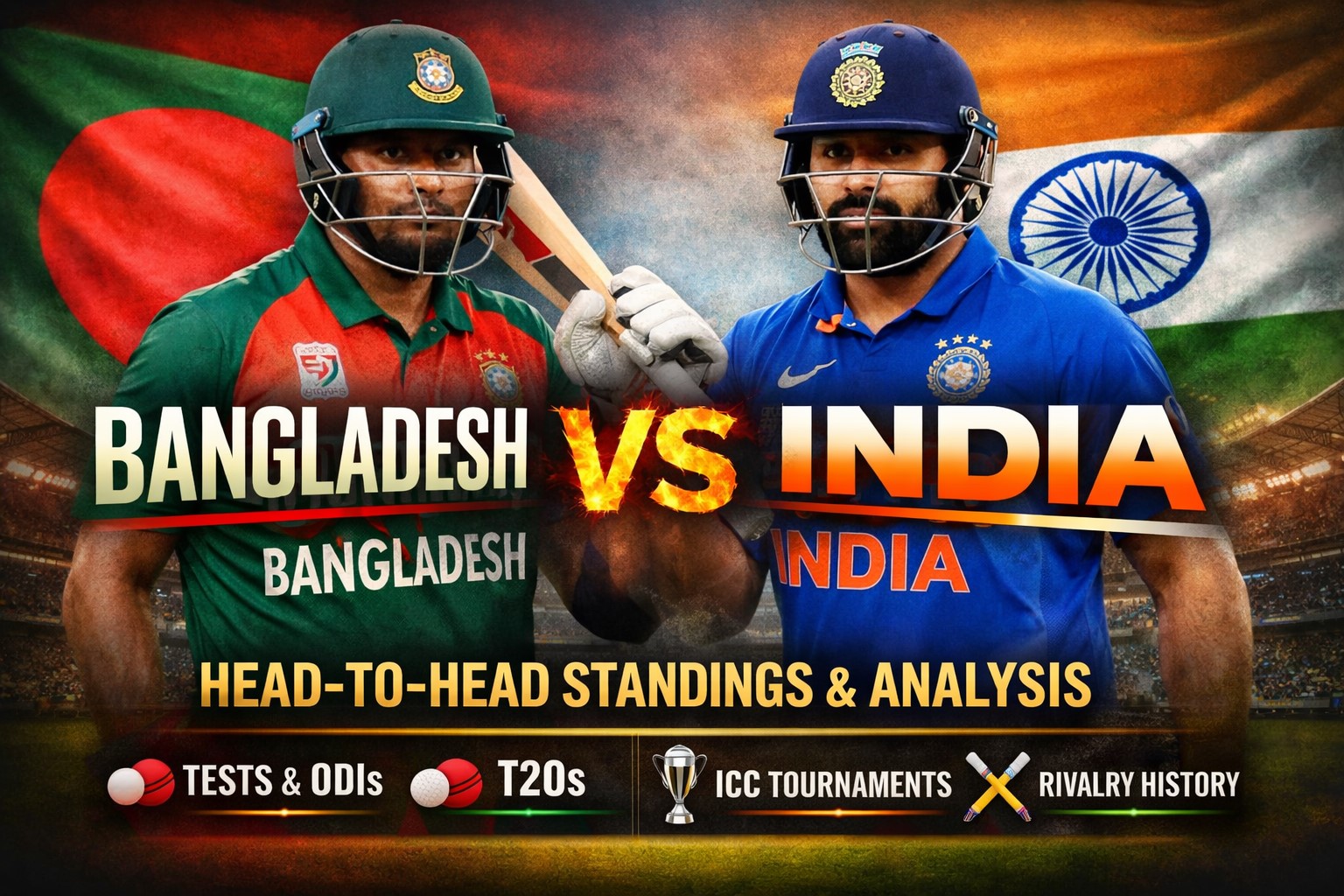
Bangladesh National Cricket Team vs India National Cricket Team Standings: An Inspiring Rise Against a Cricket Giant
The rivalry between the Bangladesh national cricket team and the India national cricket team is one of the most fascinating stories in modern Asian cricket. What began as a largely one-sided contest…
Cricket Memorabilia And Facts: The Ultimate Guide to Legendary Collectibles, Historic Moments, and Untold Cricket Stories
Cricket is not merely a sport; it is a historical journey that has shaped cultures, inspired nations, and created unforgettable memories for millions of fans around the world. From its humble beginnings…
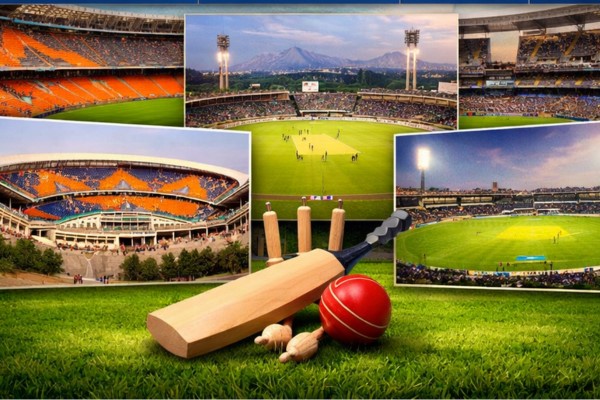
Cricket Stadiums in India: Explore the Most Iconic and Legendary Grounds
Introduction: Cricket Stadiums in India Cricket has always been more than just a sport in India; it is a passion that unites millions of people across the country and evokes emotions that…