Cricket is not just a sport; it is a living chronicle of cultural, social, and athletic evolution, tracing its origins from the pastoral fields of England to the sprawling stadiums and digital arenas of today. The history of cricket formats is a fascinating journey that reflects both the transformation of the game itself and the changing demands of its audience. From the slow-paced, strategy-heavy matches of the early centuries to the modern high-octane spectacles that attract millions worldwide, cricket has continuously reinvented itself to remain relevant, entertaining, and challenging. Over the centuries, as the sport evolved, it gave rise to multiple formats, each with its own distinct characteristics, rules, and appeal, ensuring that cricket could cater both to purists who cherish tradition and to new audiences who seek thrill and instant gratification. Understanding the development and progression of these formats is essential for anyone who wants to appreciate not just the technical aspects of the game but also its broader cultural impact and global resonance.
Table of Contents
Early Beginnings of Cricket
The origins of cricket can be traced back to the 16th century in England, where it began as a rustic pastime played by shepherds and children using rudimentary equipment, typically a ball and a stick resembling a bat. There are scattered references in historical records that suggest cricket was being played as early as the 1550s, although it remained a largely informal activity with no standardized rules or structure. By the 17th century, cricket had begun to gain wider recognition, transitioning from a rural pastime into a sport of social interaction among villagers and small towns. During this period, the game was often associated with gambling and betting, which, paradoxically, contributed to its growing popularity and helped establish a more organized framework for matches. These early contests, though informal, were the foundation upon which structured cricket would eventually be built, laying the groundwork for the first standardized rules, the establishment of wickets, and the evolution of fielding and batting techniques. Cricket at this time was primarily a test of endurance, as matches were extended affairs, sometimes lasting several days, and players had to rely on skill, patience, and physical stamina to succeed.
Cricket in the 18th Century
The 18th century was a turning point in the history of cricket, marking the beginning of its transition into an organized sport. County clubs emerged, formal competitions started to take shape, and the rules began to be codified, including specifications for pitch dimensions, number of players, and the format of innings. It was during this era that first-class cricket, the precursor to modern Test cricket, began to take root. These matches were significant not just for the competitive spirit but also for the cultural and social contexts in which they were played, often attended by nobility and local communities alike. Betting and patronage played a critical role in elevating cricket from a leisure activity to a professional endeavor, encouraging skilled players to dedicate themselves to the game full-time. Notably, this period also witnessed the emergence of legendary figures such as William “W.G.” Grace, who would later dominate cricketing narratives with his extraordinary technique, endurance, and record-breaking performances. The 18th century laid the foundation for cricket as a structured sport where strategy, technique, and mental resilience became just as important as physical skill.
The Rise of First-Class Cricket
First-class cricket, which remains the bedrock of the sport, is defined by matches that last three to five days, with each team having the opportunity to bat and bowl twice. The long format demands immense concentration, strategic thinking, and stamina from players, creating a pure and traditional form of cricket that tests the very essence of skill and temperament. The first recorded first-class match took place in 1772 between Kent and Hampshire, signaling the beginning of an era where cricket began to formalize internationally. As the 19th century progressed, first-class cricket became the benchmark for evaluating player talent and performance, with county championships in England providing the platform for honing skills that would later be showcased in international Test matches. Players such as Sir Donald Bradman, whose average of 99.94 remains unmatched, and other legendary cricketers like Jack Hobbs, Len Hutton, and Sir Garfield Sobers became icons of this format, demonstrating that first-class cricket was not only about physical ability but also about understanding conditions, reading opponents, and pacing one’s innings with patience and precision. First-class cricket continues to symbolize the purity of the sport, representing tradition, strategy, and the timeless challenge of mastering a game that demands both mental and physical excellence.
The Birth of Limited-Overs Cricket
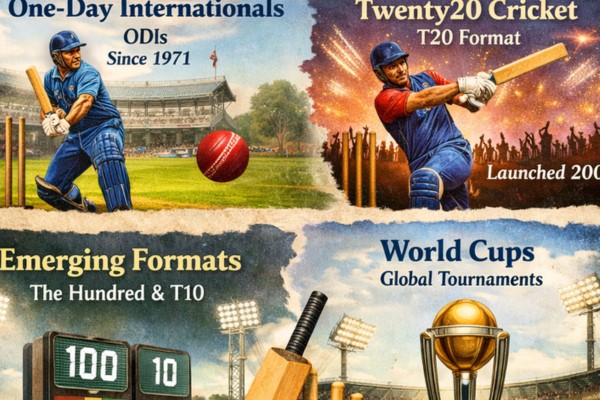
While first-class cricket is celebrated for its depth and tradition, the late 20th century witnessed the rise of a new form designed to meet the demands of changing audiences, faster-paced lifestyles, and the growing influence of media. Limited-overs cricket, characterized by matches that produce a result within a single day, introduced a revolutionary shift in how cricket was played, watched, and marketed. The first major limited-overs format to gain international attention was the One-Day International (ODI), introduced in 1971, which typically involves 50 overs per side. ODIs combined the strategic and skill-based aspects of traditional cricket with a heightened sense of urgency, resulting in dynamic gameplay where every over, run, and wicket counted significantly. The inaugural Cricket World Cup in 1975 further cemented the format’s importance, attracting global audiences and creating a new era of cricketing heroes. Memorable performances, such as Kapil Dev’s legendary 175* against Zimbabwe, showcased the excitement and unpredictability that ODIs could bring. The format also encouraged innovations in batting, bowling, and fielding, as teams adapted to the constraints of limited overs, emphasizing aggressive strategies, inventive shot-making, and tactical bowling changes. The commercial impact of ODIs was equally profound, as television broadcasters and sponsors discovered the potential of cricket as a highly marketable product, paving the way for cricket to become a professional, globally recognized sport.
The Advent of Twenty20 Cricket
The dawn of the 21st century brought about yet another revolutionary format that fundamentally altered cricket’s global appeal: Twenty20 (T20) cricket. Introduced by the England and Wales Cricket Board (ECB) in 2003, T20 cricket condensed the game into a fast-paced, action-packed spectacle lasting approximately three hours, with each team allotted only 20 overs. The format was specifically designed to appeal to younger audiences and urban populations seeking instant entertainment, and it quickly gained worldwide popularity due to its aggressive style and rapid tempo. T20 cricket emphasized innovation, rewarding power-hitting, creative bowling variations, athletic fielding, and a focus on high-impact, short-duration performances. The rise of franchise-based T20 leagues, most notably the Indian Premier League (IPL), transformed the sport economically and culturally, blending cricketing excellence with entertainment, celebrity endorsements, and digital fan engagement. The IPL and similar leagues offered a platform for emerging players to showcase their skills alongside established stars, while also expanding cricket’s reach into new markets and demographics. The ICC T20 World Cup, inaugurated in 2007, further solidified the format’s legitimacy at the international level, producing thrilling matches and legendary performances that demonstrated that cricket could maintain its competitive integrity even in a drastically shortened format.
Emerging Formats: The Future of Cricket
Beyond the traditional and well-established formats, cricket continues to experiment with innovative versions aimed at enhancing entertainment value, increasing audience engagement, and adapting to evolving media landscapes. The Hundred, launched by the ECB in 2021, represents one such innovation, featuring 100-ball matches per side and emphasizing fast, spectator-friendly gameplay. This format combines elements of T20 cricket with additional modifications to further condense matches and maintain excitement throughout, while introducing city-based franchises and modern branding strategies to attract diverse audiences. Similarly, T10 cricket, with just ten overs per side, is gaining traction as an ultra-short version of the game designed for instant engagement and extreme high-intensity action. These emerging formats indicate that cricket is not static; rather, it is a living, adaptive sport capable of evolving in response to changing entertainment landscapes, audience expectations, and technological innovations. They ensure that the sport remains relevant in the modern era, attracting new fans while preserving the core values that have made cricket a beloved game for centuries.
Comparative Analysis of Cricket Formats
When examining the evolution of cricket formats, it becomes clear that each format serves a distinct purpose and appeals to different segments of the global audience. Test cricket, with its multi-day matches, prioritizes technical mastery, strategic depth, and endurance, offering a pure cricketing experience that rewards patience and skill over immediate results. In contrast, ODIs and T20s cater to contemporary audiences who seek instant gratification, entertainment, and high-intensity gameplay, emphasizing aggressive batting, inventive bowling, and fast-changing scenarios that keep spectators engaged. The contrasting appeal of these formats ensures that cricket can simultaneously honor its rich traditions and embrace modern entertainment demands, allowing the sport to thrive across generations, cultures, and geographies. Each format complements the others, creating a diverse ecosystem where players, fans, and stakeholders can experience the game in multiple dimensions, from the cerebral and strategic battles of Test matches to the adrenaline-fueled excitement of T20 showdowns.
Cultural and Global Impact of Cricket Formats
The evolution of cricket formats has not only transformed the way the sport is played but also reshaped its cultural and global significance. Test cricket preserves the heritage and historical legacy of the sport, symbolizing discipline, technique, and endurance, while limited-overs formats like ODIs and T20s have revolutionized commercial opportunities, fan engagement, and global viewership. T20 leagues, in particular, have become cultural phenomena, merging sport with entertainment, celebrity influence, and digital media, making cricket accessible to previously untapped markets such as the United States, Canada, and East Asia. The proliferation of different formats has also influenced cricketing infrastructure, with stadium designs, broadcasting strategies, and digital platforms adapting to accommodate faster-paced matches and interactive fan experiences. As a result, cricket is no longer just a sport; it is a global cultural product capable of uniting diverse communities, promoting social engagement, and inspiring millions to participate both on and off the field.
Key Milestones in the History of Cricket Formats
The history of cricket formats is punctuated by significant milestones that reflect the sport’s adaptability and enduring appeal. In 1772, the first recorded first-class cricket match took place, establishing the foundation of structured competition. The first official Test match between Australia and England in 1877 marked the beginning of international cricket, introducing a format that would come to symbolize the ultimate test of skill and endurance. The introduction of the first One-Day International match in 1971 and the inaugural Cricket World Cup in 1975 transformed cricket into a spectator-friendly, globally marketable sport. The advent of T20 cricket in 2003, followed by the first ICC T20 World Cup in 2007, revolutionized the way cricket was consumed, attracting younger audiences and creating new economic and cultural opportunities. More recently, the launch of The Hundred in 2021 represents cricket’s ongoing experimentation with format innovation, indicating that the sport is continually evolving to meet the demands of modern entertainment and global engagement.
Conclusion
The history of cricket formats demonstrates the sport’s remarkable ability to evolve while maintaining its essence. From the slow, strategy-driven matches of first-class cricket to the fast, entertainment-packed spectacles of T20 and emerging formats like The Hundred and T10, cricket has consistently adapted to meet the needs of players, audiences, and stakeholders. Each format contributes uniquely to the sport’s identity, offering a distinct blend of strategy, skill, excitement, and cultural resonance. Test cricket preserves tradition and technical mastery, ODIs balance entertainment with strategy, T20 cricket maximizes thrill and spectacle, and new experimental formats push the boundaries of creativity and engagement. The evolution of cricket formats underscores the sport’s enduring appeal, ensuring that it continues to captivate fans across generations and geographies, remaining not just a game but a global phenomenon that reflects human ingenuity, passion, and the timeless pursuit of excellence on the field.
Related Posts

New Zealand National Cricket Team vs South Africa National Cricket Team Timeline – Amazing Match History
Introduction: New Zealand National Cricket Team vs South Africa National Cricket Team Timeline The New Zealand National Cricket Team vs South Africa National Cricket Team timeline represents one of the most competitive…
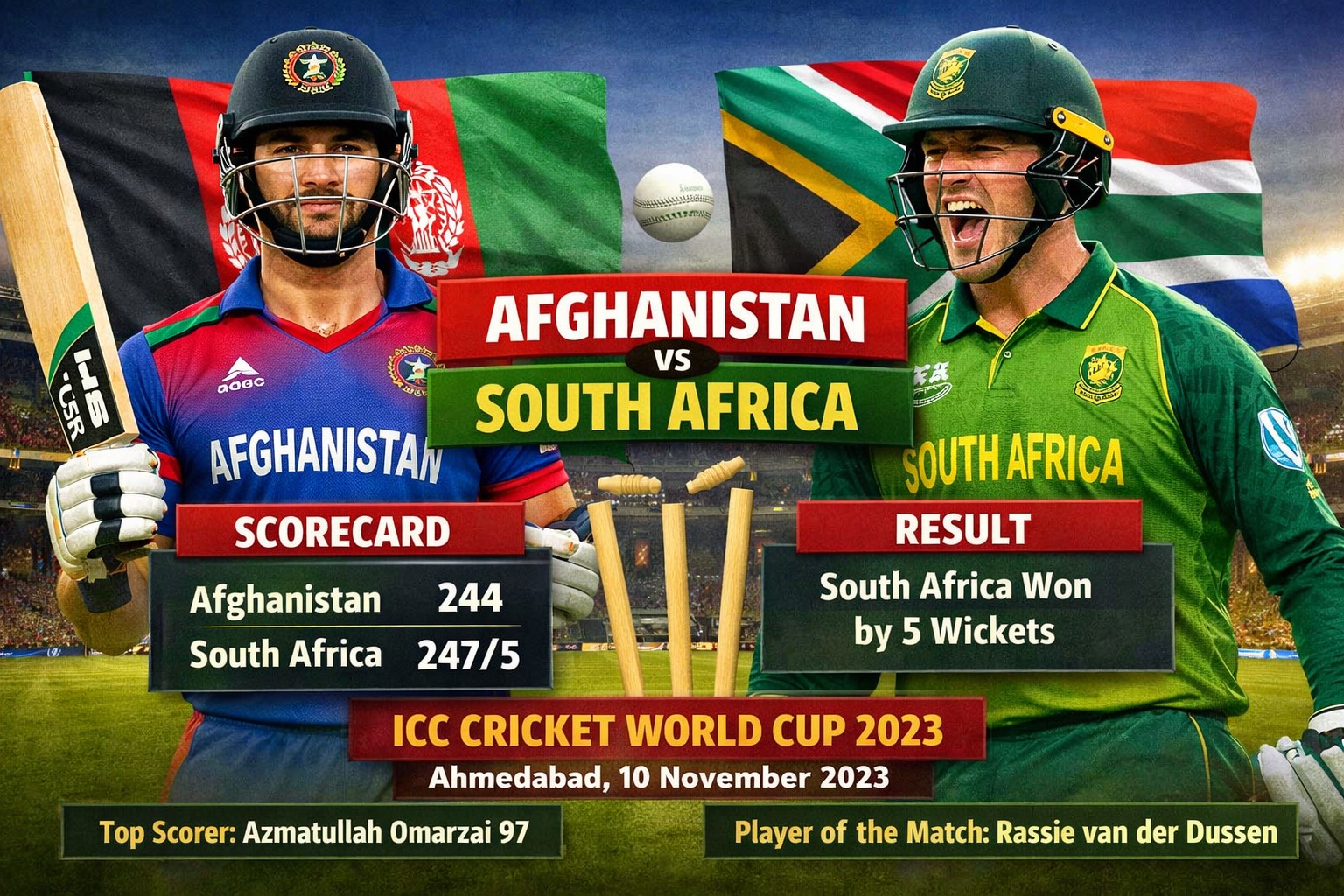
Afghanistan National Cricket Team vs South Africa National Cricket Team Match Scorecard – Thrilling Match Results, Full History & Detailed Analysis
Introduction: Afghanistan National Cricket Team vs South Africa National Cricket Team Match Scorecard Cricket has witnessed many exciting international rivalries, and the encounters between the Afghanistan national cricket team and the South…
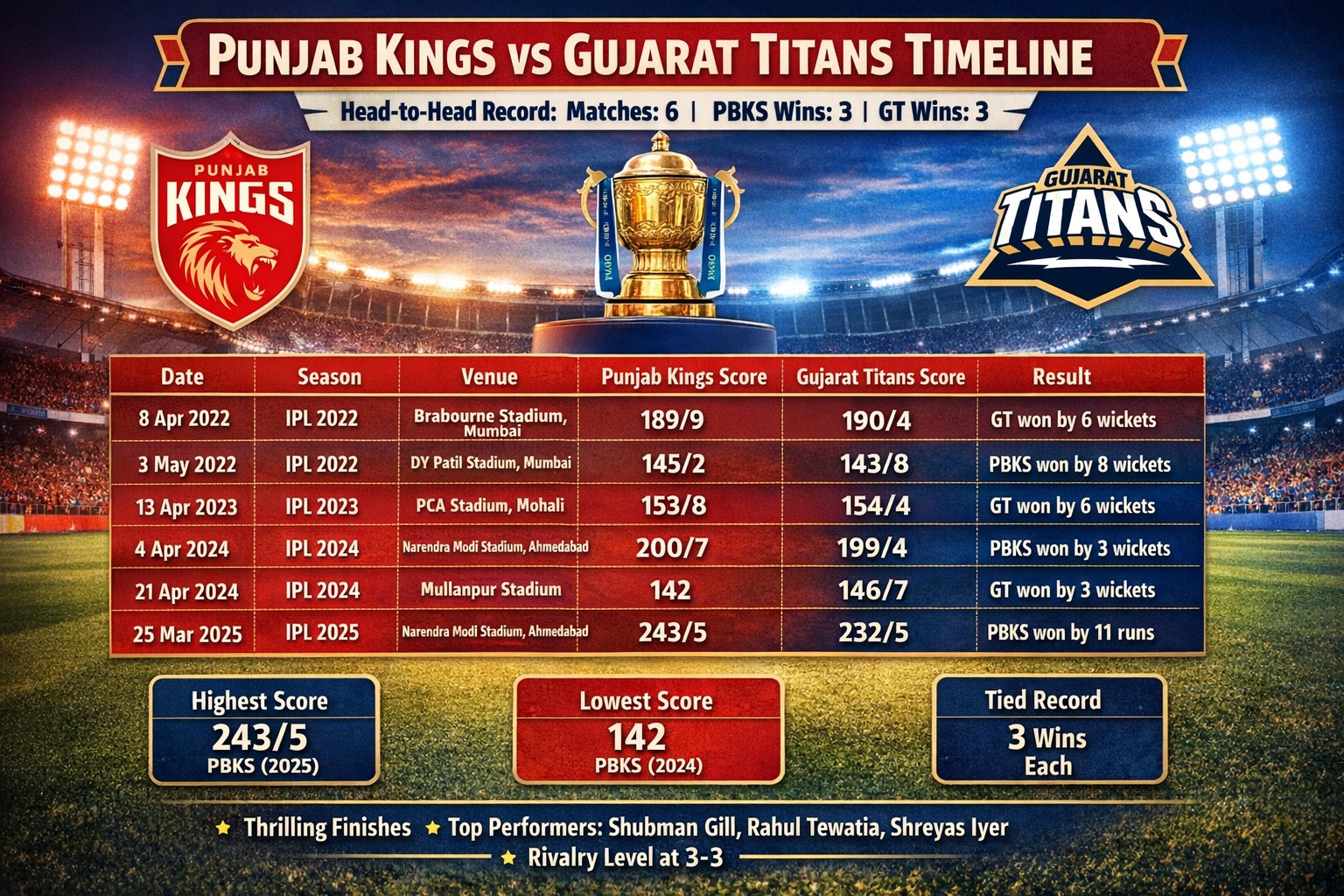
Punjab Kings vs Gujarat Titans Timeline: Full History, Match Results, and Complete Rivalry Breakdown
The rivalry between Punjab Kings and Gujarat Titans is one of the newest yet most competitive contests in the history of the Indian Premier League. Since Gujarat Titans entered the IPL in…